
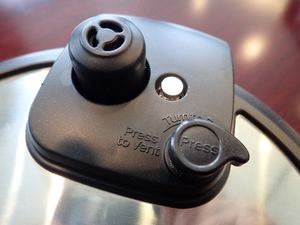
Figure 1. Pressure-release valve and vent button on the lid of an electric pressure cooker. |
Electric pressure cookers have become a fixture in home kitchens, and with them have come claims that a cooker “exploded,” spraying hot contents on the user. In a product liability case, we were asked to determine whether the safety features on an electric pressure cooker had failed.
A pressure cooker works by sealing the pot so that steam pressure builds and the boiling point of water rises, cooking food faster. Because the contents are well above their normal boiling point, opening the lid while the pot is still pressurized can release scalding steam and food all at once. Modern electric pressure cookers are designed with several interlocking safety features to prevent this:
- Float valve. As pressure builds, a small float valve rises and pushes a locking pin into the lid, mechanically preventing the lid from being rotated open. The valve only drops, and the lid only unlocks, once the pressure is gone.
- Lid locks. Locking tabs on the lid and pot engage when the lid is closed. If the lid is not fully closed, the locks do not engage and the cooker will not build pressure.
- Pressure release valve. The user can release pressure quickly through the vent before opening the lid.
We inspected the cooker and measured its lid locks, float valve, vent and seal, and tested how these features work together.
We found that the safety features worked as designed. The lid only comes off while the cooker is under pressure if it is forced open against the locking mechanism. In other words, the “explosion” was not a failure of the cooker’s design.